

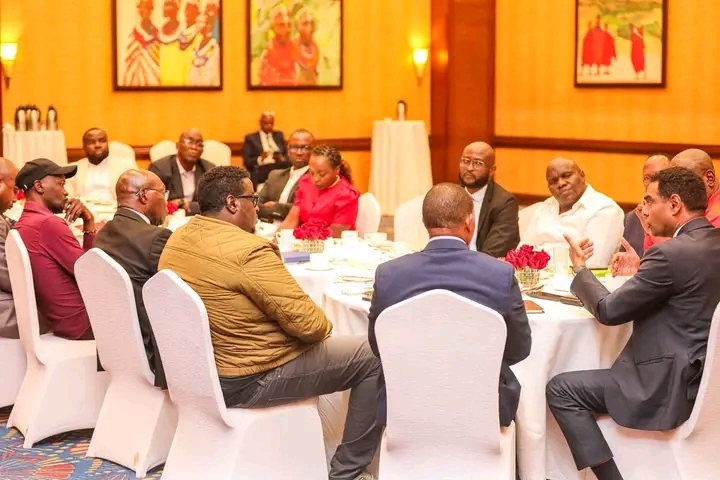
Kenyan football is standing at a historic, revolutionary crossroads that could completely transform how the local game is managed for decades to come. In a massive structural shift, definitive plans are officially in motion to transition the Football Kenya Federation (FKF) Premier League into the control of a fully autonomous, independent league management body starting ahead of the 2026/27 season.
If successfully pulled off, this bold governance reset will mark one of the single biggest milestones in the history of the domestic game.
The Roadmap to Total Autonomy
This groundbreaking shift didn’t just drop from the sky; it is the result of a series of high-level, crunch meetings between FKF President Hussein Mohammed and the top-flight club chairmen under the SportPesa League Chairmen’s Council. Fed up with decades of administrative friction, the clubs have made their positions crystal clear: for local football to become a truly competitive commercial powerhouse, the top tier needs to be run like a professional business.
To steer this massive ship through the transition phase, stakeholders have agreed to immediately establish a temporary group known as the Transition League Management Committee (TLMC).
This powerhouse committee will pool together the heavy hitters of the local game, including direct club representatives, FKF officials, key corporate sponsors like SportPesa, and major broadcasting partners such as Azam TV. The primary directive of the TLMC isn’t just to keep the current league machinery running smoothly, but to lay down a rock-solid, transparent foundation for a fully independent corporate entity that can eventually stand entirely on its own two feet.
Chasing the Money: Transparency and Commercial Power
Let’s be completely honest—at the absolute core of this aggressive push for independence is the issue of money and financial transparency. For years, clubs across the country have quietly voiced deep frustrations over how broadcasting rights, sponsorship windfalls, and general matchday revenues are distributed.
An autonomous league structure strips away the bureaucratic red tape. Operating as an independent business entity makes it infinitely easier to bargain for premium broadcasting deals, lock down lucrative corporate sponsorships, and directly improve player welfare across the board.
Crucially, an independent league shields the sport from the volatile waves of federation politics. Instead of rewriting the script every time a new administrative regime takes over, clubs can finally look into the future with long-term strategic planning, better marketing infrastructure, and modern fan engagement models.
Staying Within the Global Ecosystem
While the push for independence signals a massive power shift back into the hands of the clubs, it is important to note that this is not a rebellious breakaway league. The entire transition process has been explicitly framed as collaborative rather than confrontational, remaining fully aligned with the broader FKF constitution and existing statutes.
Even with full administrative and commercial autonomy, the new league body will completely adhere to FIFA and CAF regulations. This ensures that Kenyan football remains tightly knitted into the global football framework, completely preserving our pathways to international competitions and continental showpieces.
With monumental projects like the state-of-the-art Talanta Sports City stadium nearing completion and the highly anticipated 2027 Africa Cup of Nations (AFCON) on the horizon, this governance reset could not have come at a better time. By bridging the gap between raw, untapped potential and ruthless professional execution, Kenyan club football might finally be ready to take its rightful seat at the high table of African sports.


